


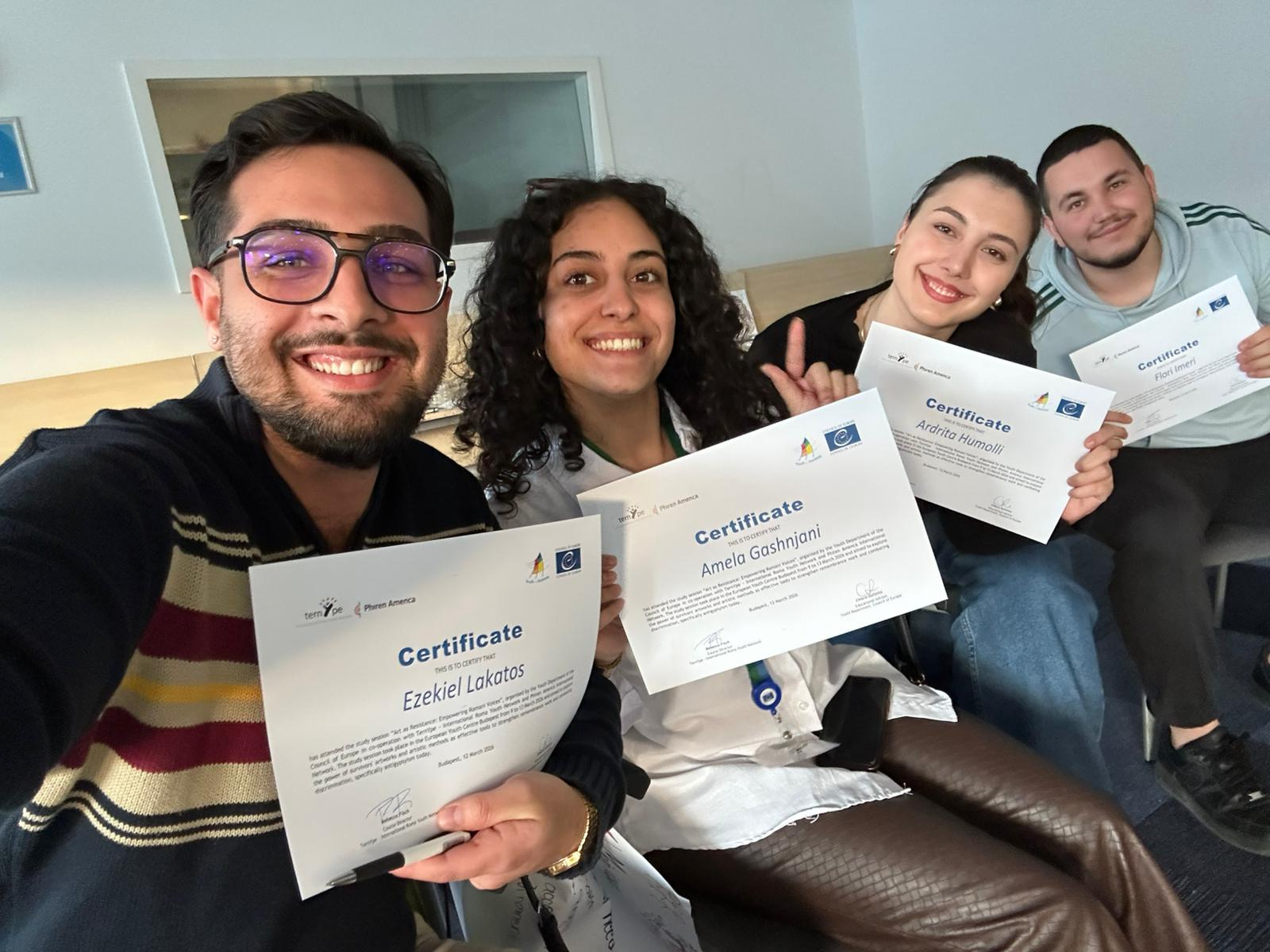
In March 2026, Phiren Amenca International Network and ternYpe International Roma Youth Network co-organised a five-day Study Session at the European Youth Centre in Budapest, in cooperation with the Youth Department of the Council of Europe. Titled Art as Resistance: Empowering Romani Voices, the session brought together 22 artists, youth workers, educators, and activists from 13 countries to explore the power of artistic expression as a tool for remembrance, identity, and the fight against antigypsyism.
About the Study Session
The study session centred on a single, powerful question: what can art do that other forms of education and dialogue cannot? Connecting remembrance and lived experience, participants explored artistic expression not only as a form of personal creativity, but as a vehicle for healing, community building, and social change — with a specific focus on Roma Holocaust remembrance and combating antigypsyism today.
The programme drew on the Council of Europe’s Recommendation CM/Rec(2023)4 on Roma Youth Participation, grounding the session in a broader commitment to meaningful Roma youth inclusion in civic and cultural life.
What We Did
Across five intensive days, participants engaged with a rich and varied programme:
- Day 1 opened with community-building exercises and an introduction to the session’s central question: “What is art?”
- Day 2 featured a gallery of survivors’ artworks, input on the role of art in remembrance, short film screenings, and a live Q&A with filmmaker Lisa Smith.
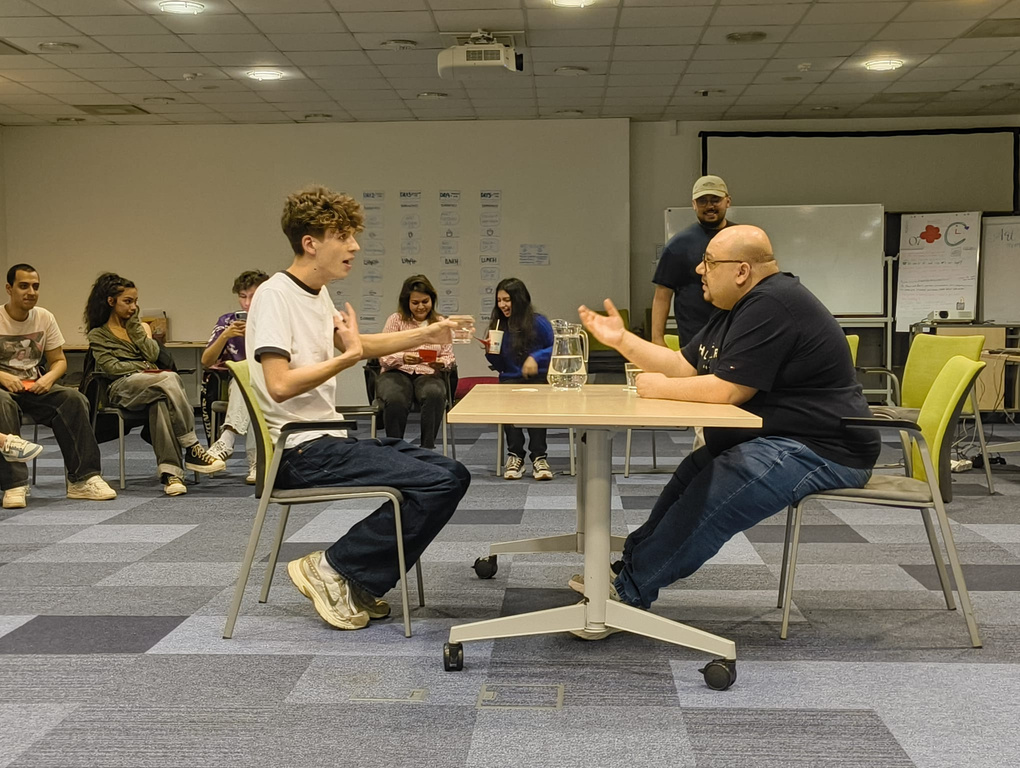
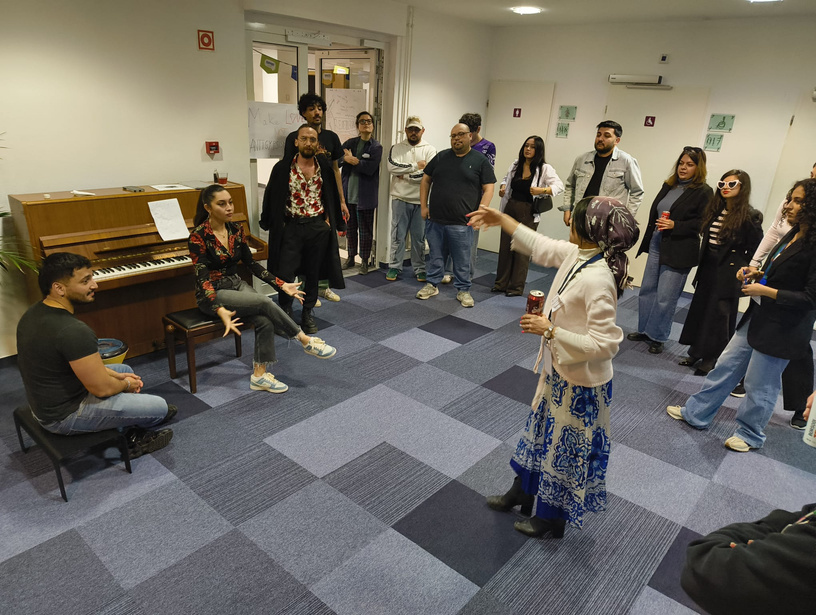
- Day 3 offered creative workshops in Stand-Up Comedy and Music, alongside a visit to Bura Gallery — a progressive Roma art space in Budapest.
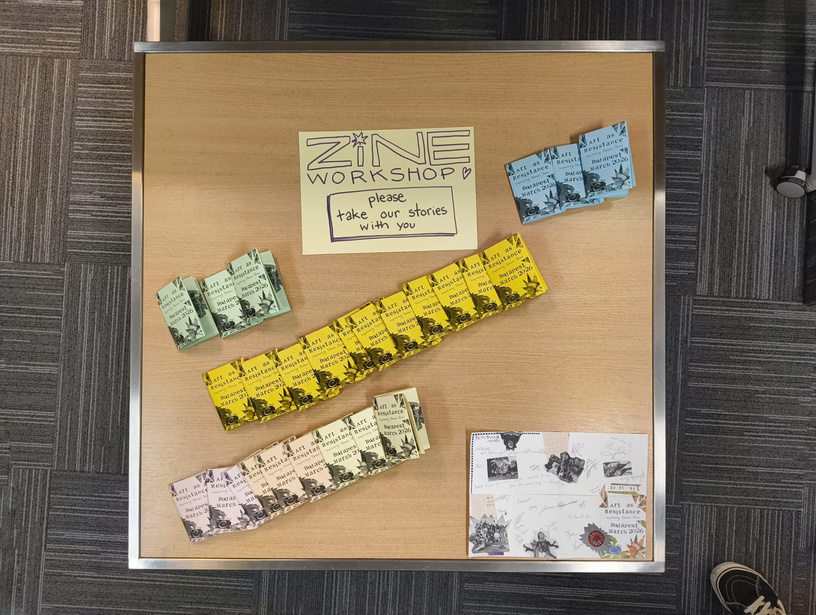
- Day 4 continued with workshops in Dance, Zine-making, Performance, and Clay sculpture, culminating in a plenary discussion on art as activism.
- Day 5 brought everything together in a Living Museum, where participants displayed the artworks they had created across the week — including performances, songs, paintings, sculptures, and zines — before developing concrete community action plans to take home.
What We Learned
Key finding: Artistic expression is a powerful yet often underestimated tool for education and dialogue — particularly when approaching sensitive topics such as the Roma Holocaust. Art allows people to connect on a human and emotional level first, before engaging with the historical and social dimensions of discrimination.
The session demonstrated that creative methods — from comedy to clay — can lower barriers, build trust, and open space for conversations that more formal educational approaches often struggle to reach. Participants left with concrete tools, new networks, and their own plans for bringing art-based activism into their communities.
“The feeling of pride in my identity. Motivation to bring change and to stand up against racism.” — Participant
“I will take all the games and information to present them in my high school for increasing the amount of awareness about our identity.” — Participant
Read the Full Report
The full report of the Art as Resistance: Empowering Romani Voices Study Session is now available for download.📄 Download the Report